Full Scope SLEP Provision Minimum Downtime Optimal Cost Saving
Overview
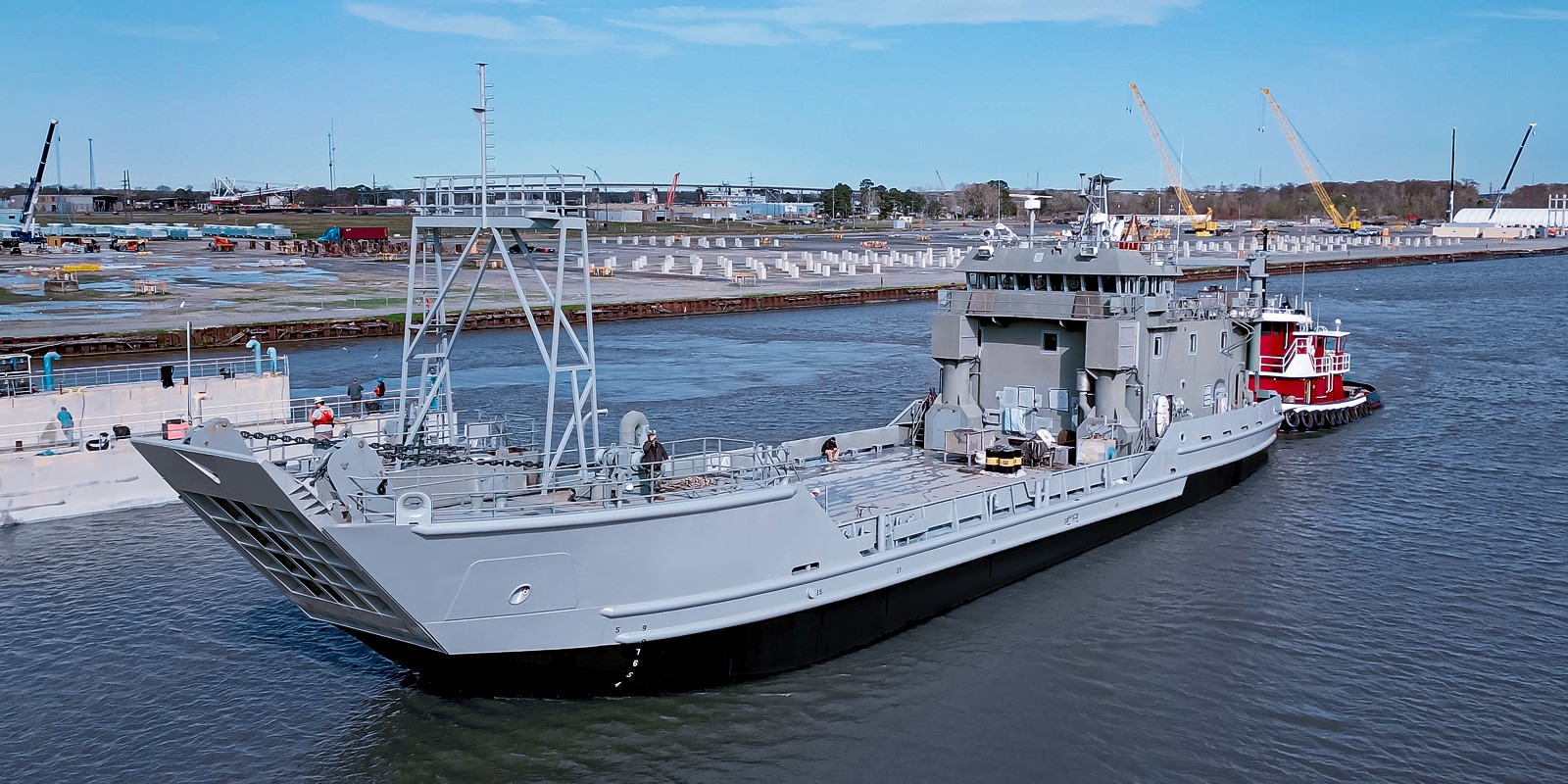
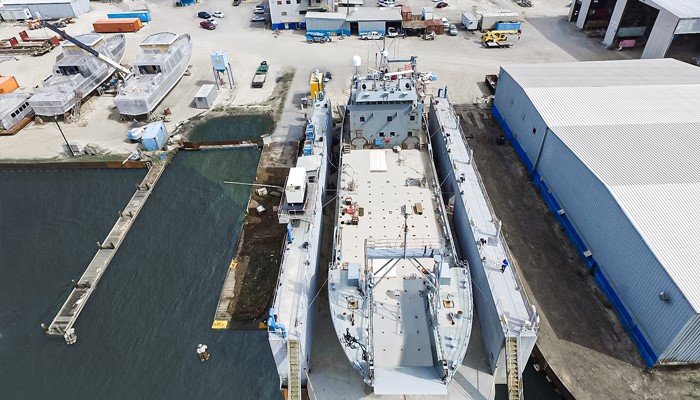
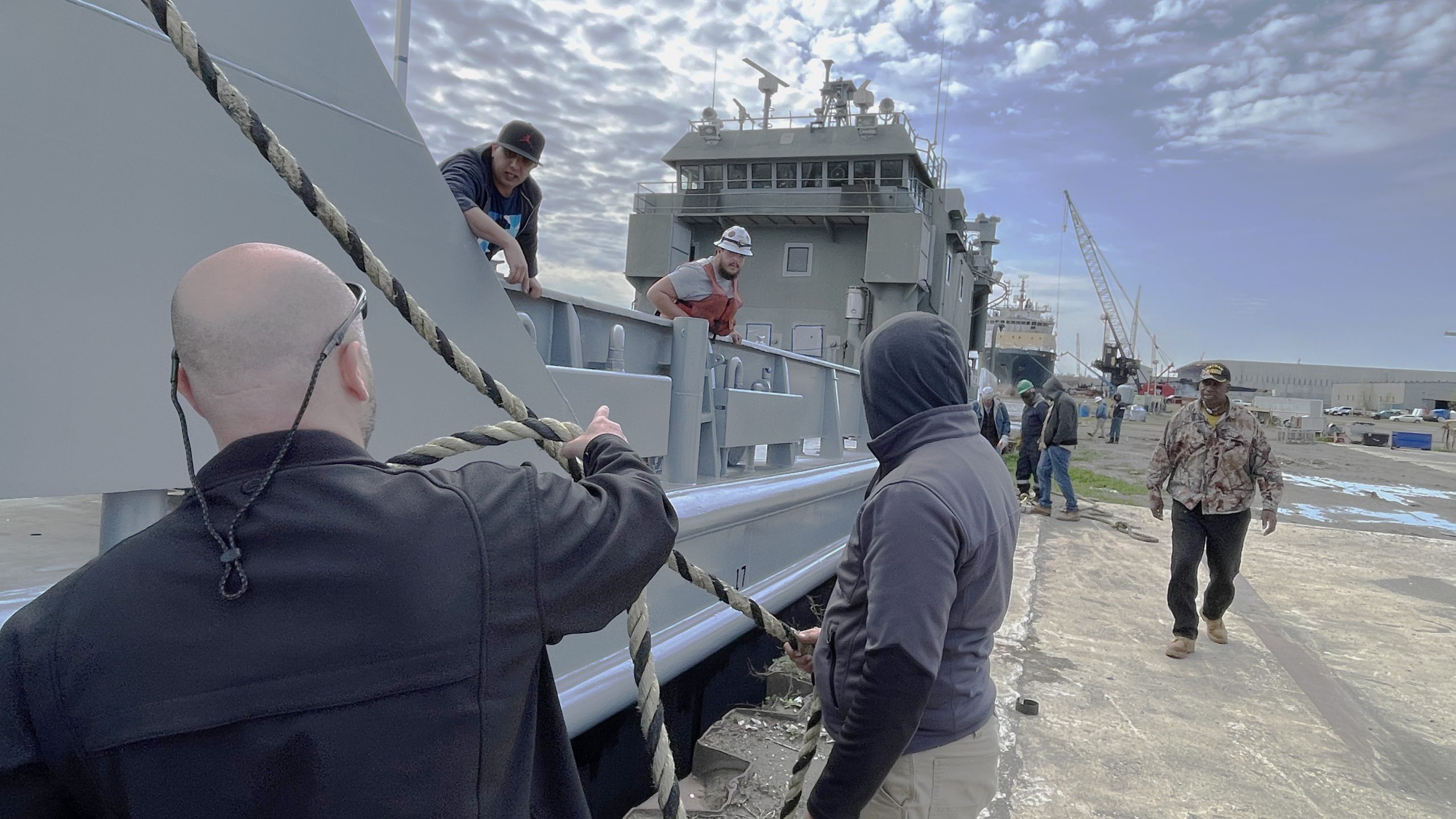
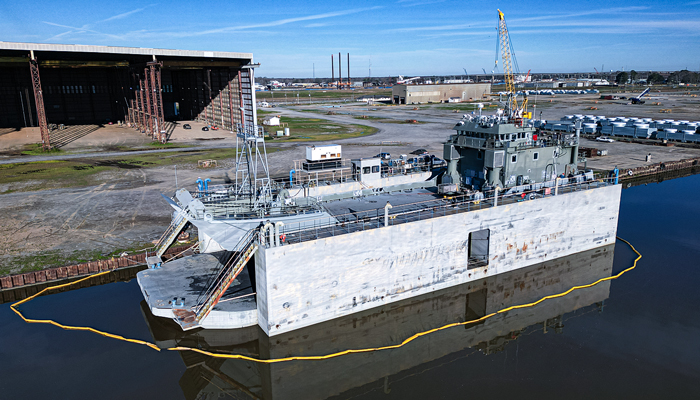
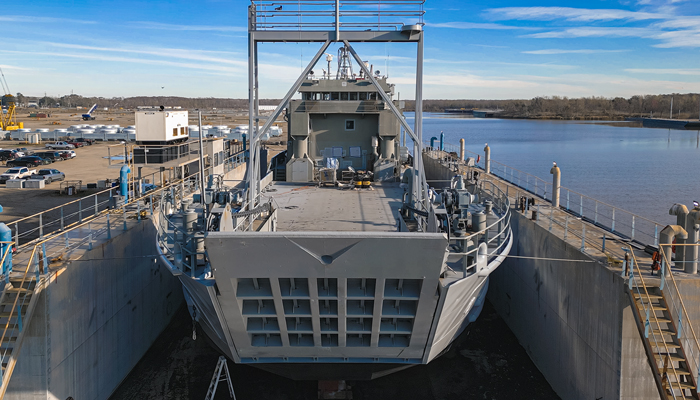
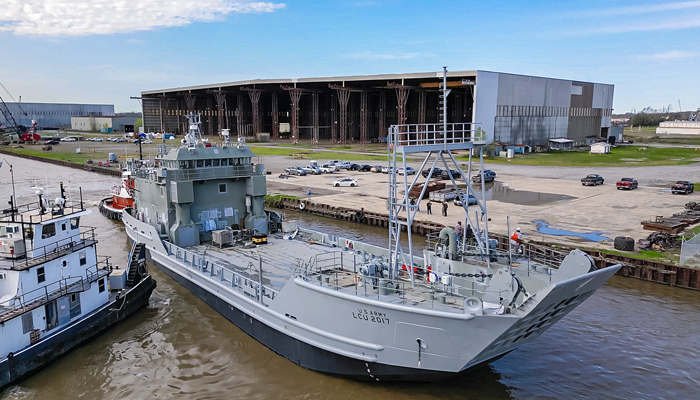
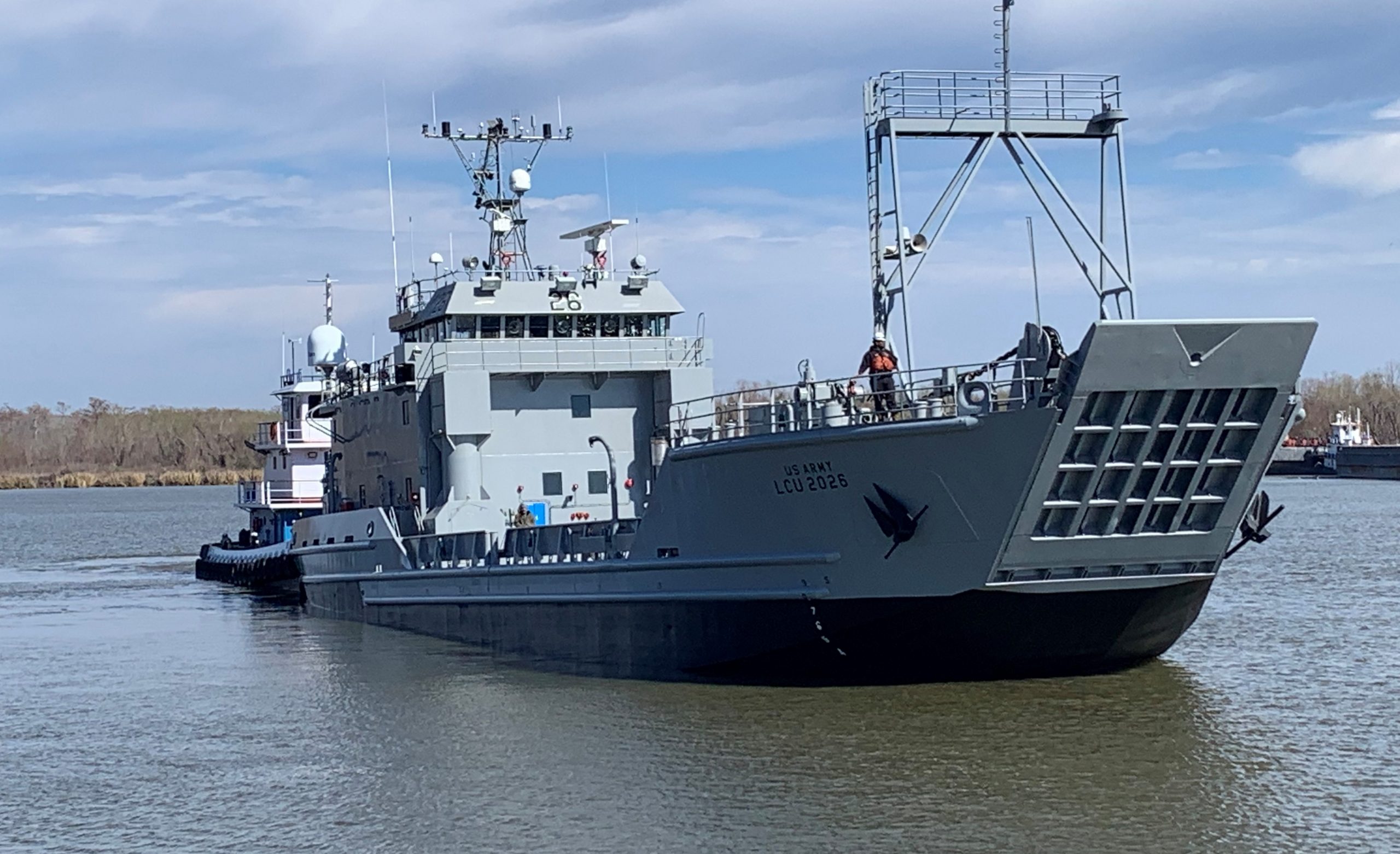
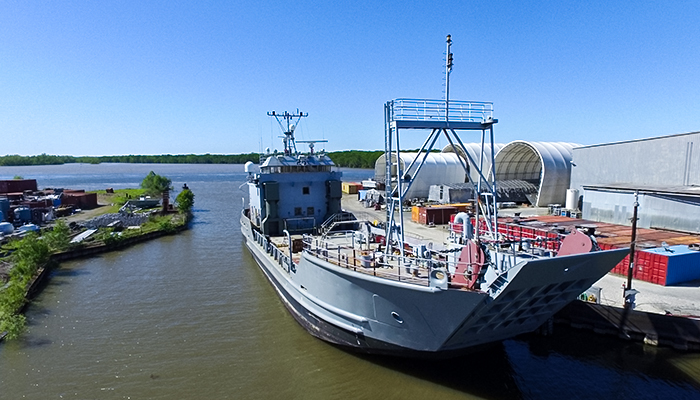
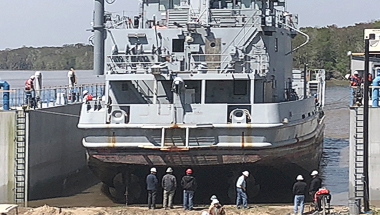
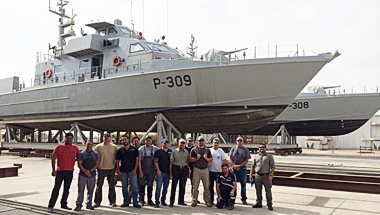
Swiftships executed a major program for the U.S. Army on SLEP for LCU 2000 vessels. The program involved three (3) LCUs, each with different design variations. We provided full support to the U.S. Army, including inspections and condition assessment, maintenance plan and cost analysis, program management and SLEP execution. Swiftships’ proven SLEP methodology led to tremendous savings and minimum vessel downtime.
Our scope of work included:
On-Condition Cyclical Maintenance (OCCM)
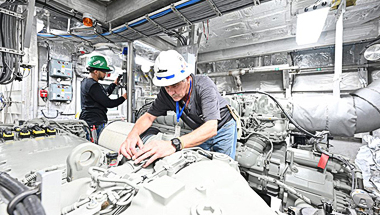
Replacement of propulsion engines and bow thruster engines
Replacement of generators including emergency generator
Replacement of electrical switchboard
Condition-based hull and superstructure repairs
Replacement of selected communication and navigation systems
Highlights
Full Scope SLEP
For 3 different design LCU 2000 vessels from inspections to fully operational state
Benchmarkable Results
Minimum vessels downtime not exceeding budget limits
Scope
Reset
Actions were taken by the Swiftships production and maintenance team to restore units to a desired level of combat capability commensurate with the unit’s future mission. It encompassed maintenance and supply activities that restore and enhance combat capability, often including modifications or incremental upgrades to the unit and pre-positioned equipment damaged, stressed, rendered obsolete, or worn out due to combat operations by repairing, rebuilding, or procuring replacement equipment and components.
These maintenance and supply activities involve depot and field level (i.e., organizational and intermediate) repairs and overhaul centrally managed to specified standards. Procurement, Research Development Test and Evaluation (RDT&E), and Operations and Maintenance (O&M) teams that were involved during repairs/overhauls, and recapitalization (rebuild or upgrade) that enhances existing equipment through the insertion of new technology or restoration of selected equipment to a zero-miles/zero-hours condition.
Reconstitution
Action beyond reset was taken during or after operational employment to restore or upgrade combat capability to full-spectrum operational readiness. Force reconstitution spans activities from normal sustainment (rearm, refuel, recovery, repair, and replace), through reorganizational regeneration of units to redeployment. Reconstitution phases included personnel, equipment, and training.
Kit of Material (KoM)
Swiftships KIT of Materials (KoM) refers to new materials and technologies developed in a closed chain, from basic research to economic implementation, using our systems integration team that studies basics to advance the development of the client’s requirements. The growth of materials and the development of environmentally friendly technologies play a unique role in the development of KoM. Furthermore, the integration of information-based approaches and modeling in the digitalization of material plays a growing and increasingly important role.
Structuring
Our unique 3D manufacturing techniques allow us to deliver the same components for every kit. This feature enables the production team to prepare a work package before the characterization and disposition of the material required during various production phases.
Characterization
The systems play an essential role in understanding the material function and structure formation and their further application development. A key challenge is to close the loop in the material development cycle. The results of materials characterization allow Swiftships to keep Total Ownership Cost (TOC) at the lowest for clients to get the best bang for their buck.
Bill of Materials (BOM)
Allows Swiftships to supply customers with the right products at the right time and price. It helps improve accuracy, saves time, and keeps your customers satisfied. Additional features make Swiftships KoM so popular with developing militaries Defense Economic Base (DEB). Advantages of our service include:
Serialized assemblies that contain materials and components
Fully costed finished goods with component costs as well as labor costs
Maintain accurate inventory quantities for future assemblies or raw materials
Approach
As the initial effort, our Systems Engineering and Production team provided amplifying information about the continued use of the U.S. Army’s LCU 2000 vessels. We completed Service Life Extension Assessment (SLEA) and determined the risks and the life cycle costs of continuing the product or service versus the cost of a replacement system.
The program involved three (3) LCUs, each with different design variations. Our SLEP program execution was managed as follows:
Cost plan of SLEP operation was submitted to the US. Army per vessel
Maintenance plan was submitted with a schedule, and cost (if criteria exceeded the cost, additional funding was requested via CFRs)
Upon further inspection during the effort, if parts/systems were about to reach their operations life limits, an On-Condition Cyclical Maintenance (OCCM) plan was submitted per task for further approval
If parts/systems were no longer available for repair and maintenance, an alternative (Boat ALT) was submitted to the Army Watercraft Division for Engineering approval
Results
Swiftships System Engineers and Logisticians’ proactive approach to prediction, led to tremendous savings and minimum vessel downtime. Our proven SLEP methodology allowed us to prevent, system failures before the operations and support costs rise above acceptable limits.
In addition, our PMO team tracked critical factors during the entire SLEP effort:
Current life cycle costs of the system
Design life and expected remaining useful life of the system
Software maintenance
Configuration management
Warranty policy
Availability of parts, subsystems, and manufacturing sources
Availability of system documentation to support life extension